
Moving Into a London Flat: What to Expect
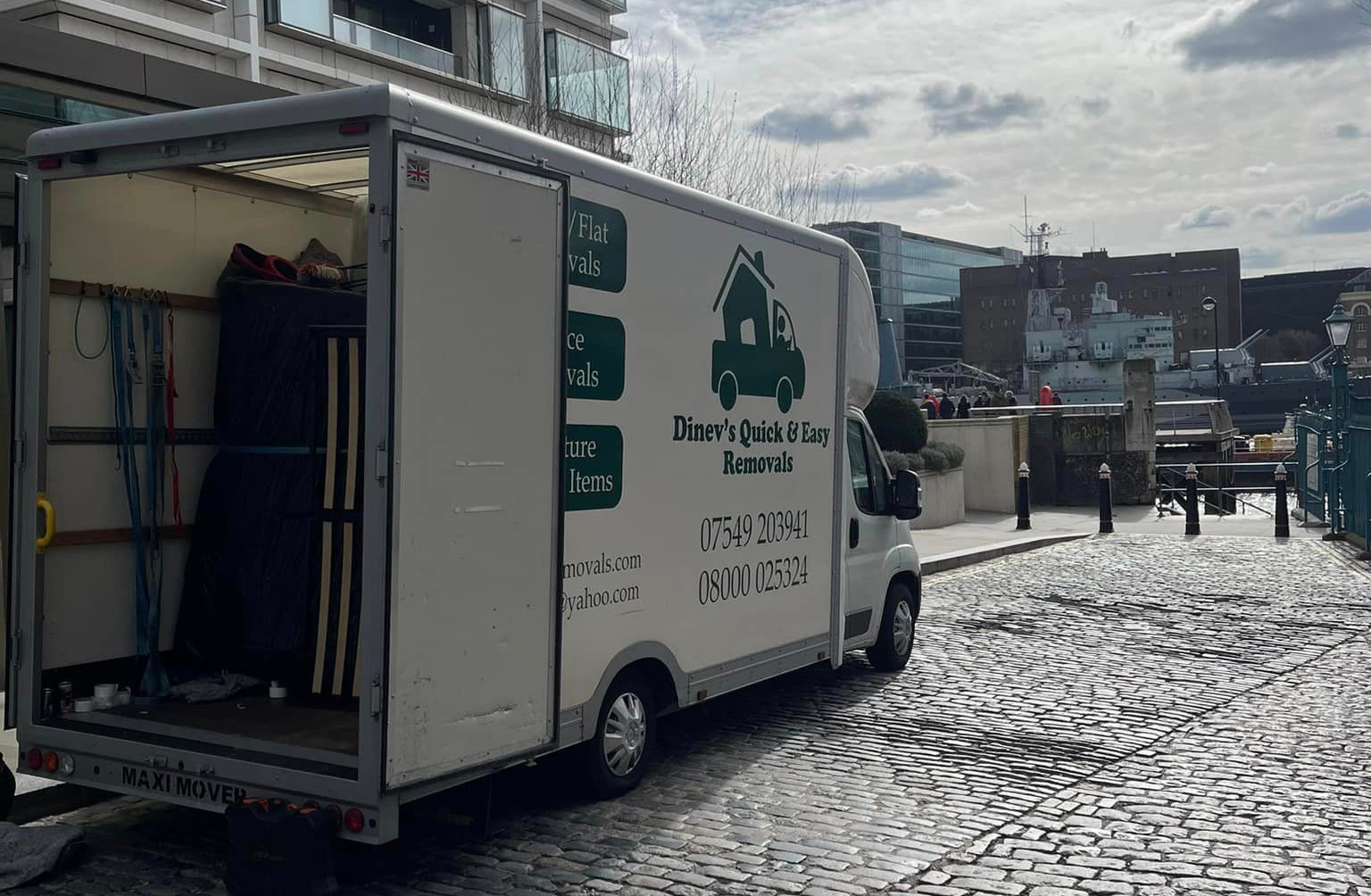
Moving into a London flat is not the same as moving into a house. Lifts with weight limits, communal corridors, porter sign-in sheets, controlled parking zones outside, and building management offices that close at 5pm on Fridays: each one adds a layer of coordination that catches first-time flat movers off guard. Dinev's Quick & Easy Removals is a family-run team based in Ilford, Move Assured accredited, operating a ULEZ-compliant fleet across Greater London, and rated 5 stars from 600 Google reviews. This guide covers what to plan, what to book ahead, and what to do on the day itself.
What Makes a Flat Move Different From a House Move
The main difference is access. A house usually has a driveway or a short carry from the kerb to the front door. A flat adds at least one of the following: a lift, a staircase, a communal entrance with a key fob or entry code, a porter or concierge, a building management company with its own move-in rules, or a loading bay with a booking requirement.
In practice, most London flat moves involve several of these at once. A two-bedroom flat in a purpose-built mansion block in Maida Vale might require a bay suspension from Westminster Council, a lift booking through the building management company, a time window imposed by the porter (for example, no moves before 9am or after 4pm), and a lift-blanket deposit paid to the concierge on the morning of the move.
None of these is a serious obstacle when you know about them. All of them become problems if you find out on move day.

Types of London Flat: What to Expect From Each
London's flat stock falls into a handful of broad types. The access challenge varies by type.
Converted period terraces are the most common flat type across inner East, North and South London. A Victorian terrace converted into three or four flats will typically have a communal front door, a narrow hallway, a steep staircase, and no lift. Ground-floor flats are the straightforward ones. Upper-floor flats in tall Victorian terraces can involve three or four flights of narrow stairs with a tight turn on each landing. This is where a professional crew earns its place: carrying a three-seat sofa up four flights of a converted terrace staircase without damaging the walls or the furniture requires experience and the right equipment.
Purpose-built mansion blocks are concentrated in West, North-West and inner East London: Maida Vale, Finchley, Kensington, Hackney and Walthamstow all have large stocks of them. Mansion blocks usually have a communal lift, a concierge or porter, and a building management company. The lift is a benefit, but lift dimensions vary and some will not take a double mattress or a large wardrobe standing upright. The building management company sets the move-in rules: many require a booking for the service lift (different from the passenger lift), a deposit against damage to the lift interior, and a defined move window.
New-build blocks near Stratford, Canary Wharf, Paddington Basin and along the Thames have purpose-built loading bays and freight lifts. These are the easiest flat moves in terms of physical access. The complication is the booking system: loading bays are often managed online or by the facilities team, and slots fill up quickly on popular move dates (Friday afternoons, end of month).
Ex-local-authority flats appear across the whole of Greater London. Many are on estates with vehicle access restrictions. Parking inside the estate may require a visitor permit from the housing management office, and large vehicles may not be permitted past the barrier at all, which means a longer carry from the nearest public road.
Parking and Permits: The Step Most People Skip
Controlled Parking Zones cover most of inner London. Outside a converted terrace in Islington, Hackney or Walthamstow, a removals vehicle cannot stop without either a suspended bay or a valid permit. A driver who parks on a double yellow line to unload will receive a Penalty Charge Notice. On a busy move day, nobody has time to deal with that.
A bay suspension is a formal application to the local council to reserve a section of public road for your vehicle on a specific date. Most London councils require the application at least 10 working days in advance. Some boroughs, including Westminster and the Royal Borough of Kensington and Chelsea, need closer to 15 working days for high-demand streets.
Fees vary by borough: Westminster charges around £65 to £80 per bay per day. Islington and Hackney sit in a similar range. The council installs "No Parking" cones or signs in advance of your move date.
When you book with Dinev's Quick & Easy Removals, we handle the bay suspension application for your collection and delivery addresses as part of the move plan. You supply the addresses and move date; we submit the paperwork.
How to Prepare Your Flat for Move Day
A flat move goes faster when the property is ready before the crew arrives.
Confirm your move window with the building. If there is a porter or concierge, call or email them at least a week ahead to confirm what time the crew can start and which entrance to use.
Book the service lift or loading bay. Do this as soon as your move date is set. Popular dates run out.
Clear the hallways and communal areas. Remove anything from the corridor outside your flat door that could slow the carry.
Disassemble large furniture in advance where possible. Beds, large wardrobes and dining tables are faster to carry when broken down. Our team can handle disassembly on the day, but doing it the evening before saves time on the morning.
Label boxes by room. It sounds simple, but a box labelled "bedroom" goes straight to the bedroom at the new address. An unlabelled box gets opened in the hallway.
Keep your essentials box separate. Kettle, mugs, phone charger, a change of clothes, toilet paper. Pack this last; it goes in the front of the van and comes out first.


Comments